
Sheet Metal Worker
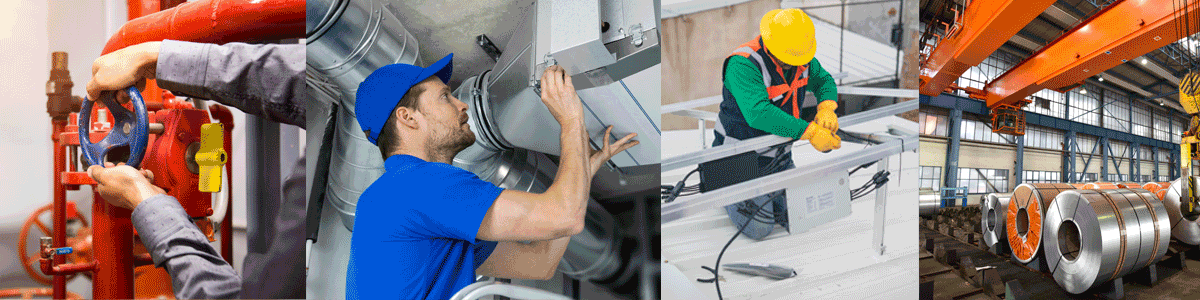
 Sheet metal workers fabricate, install and maintain metal components used in construction, manufacturing and HVAC systems. RCC’s Sheet Metal Apprenticeship Program combines hands-on training with classroom instruction to prepare students for skilled careers in sheet metal work. Apprentices learn to safely cut, shape and assemble metal materials, gaining the technical skills needed to work in residential, commercial and industrial settings.
Program Overview
The Sheet Metal Worker Apprenticeship Program takes approximately 4 years to complete and combines 7,200 hours of on-the-job training with 756 hours of classroom instruction. The program prepares apprentices to take the state licensing exam and offers multiple educational and professional opportunities, including:
- Earning an RCC Certificate of Completion upon finishing the apprenticeship.
- Receiving a journeyman card from the State of Oregon.
- Option to pursue an associate degree in a related technical field.
Career & Salary Outlook
- Sheet Metal Worker
Fabricates, installs and maintains metal components used in HVAC systems, roofing, ductwork and building exteriors. - HVAC Duct Installer
Specializes in installing and assembling sheet metal ductwork for heating, ventilation and air conditioning systems in residential, commercial and industrial buildings. - Fabrication Technician
Works in a shop setting to cut, bend and assemble sheet metal parts using machines and hand tools based on blueprints or CAD drawings. - Welding Technician
Joins sheet metal components using welding processes as part of fabrication or installation in construction and manufacturing settings. - Metal Roofing Installer
Installs and maintains sheet metal roofing systems for commercial and residential buildings, including flashing and drainage systems.
Pay increases significantly after certification. Experienced sheet metal workers can earn $55,000-$85,000+ per year, depending on the industry, location and level of responsibility.
Application Process
The Sheet Metal Apprenticeship Program typically accepts applications once or twice a year. Applications are usually accepted May 11–June 11 and mid-August (August 10–August 21) for each application cycle. These dates may be adjusted as needed to accommodate program requirements. Applicants who are not employed by a contracted training agent by September 1 will be removed from the pool of eligible candidates.
To remain eligible, applicants must secure employment with a training agent before starting classes. Those who don’t find employment may reapply in the next cycle.
Tip: To increase your chances of entering the program, we highly encourage applicants to secure employment with one of our training agents — even in an entry-level role. Find approved training agents by going to Oregon BOLI Apprenticeship and searching for program MA #5006.
To apply, you must:
- Be at least 18 years old.
- Have a high school diploma or GED®.
- Successful completion of one year of high school algebra or an equivalent post-high school algebra course(s) with a grade of C or better.
- Provide documents showing you meet these requirements.
Sheet Metal Applications are now available online. Follow the WORKHANDS application link to get started.
Estimated Program Costs
| Sheet Metal Tuition & Fees (based on In-State Fall 25/26 tuition & fee schedule) | Costs |
|---|---|
| 1st Year Tuition ($330/term X 3 terms) | $990.00 |
| 2nd Year Tuition ($330/term X 3 terms) | $990.00 |
| 3rd Year Tuition ($330/term X 3 terms) | $990.00 |
| 4th Year Tuition ($330/term X 3 terms) | $990.00 |
| Universal Fee ($72/term X 12 terms) | $864.00 |
| Total | $4,824.00 |
| Books & Course Materials (estimate based on RCC Bookstore and Syllabi) | |
| 1st & 2nd Year Textbooks | $99.50 |
| 3rd Year Textbooks | $63.94 |
| 4th Year Textbooks | $29.99 |
| Course Materials | $37.00 |
| Total | $230.43 |